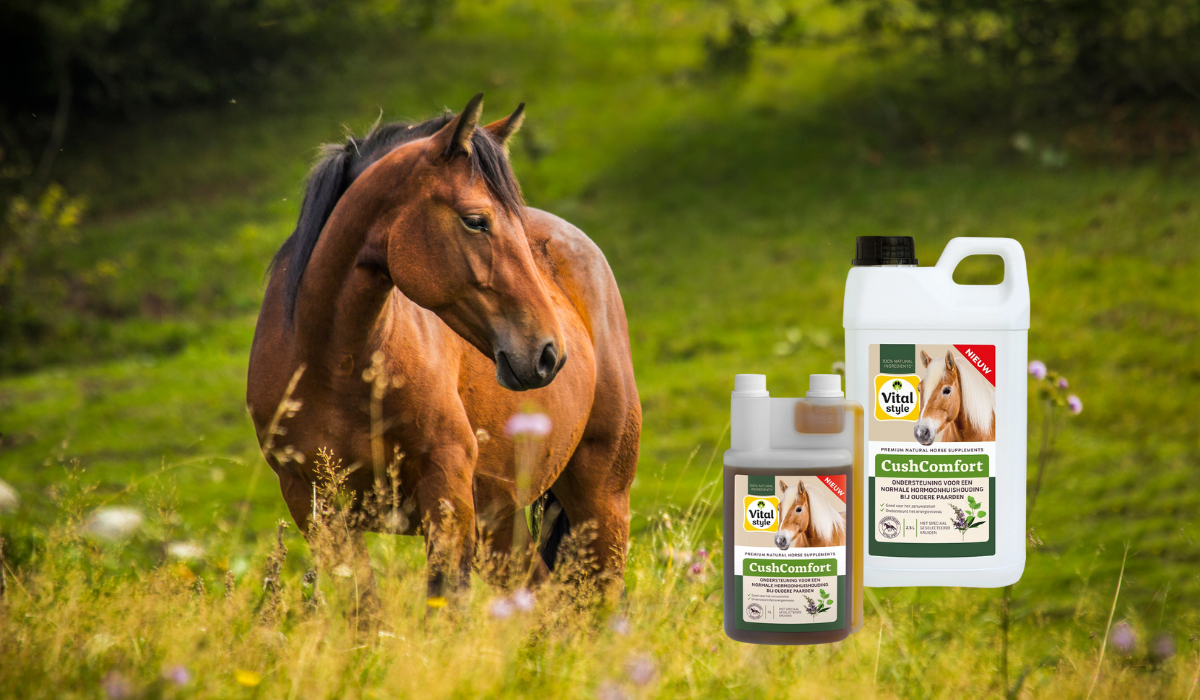
PPID, better known as Cushing’s disease, is a common condition in older horses and ponies. It is estimated that around 15% of horses over the age of 15 are affected. The disease is chronic and incurable, which means that long-term support is essential to maintain the horse’s quality of life. While medication plays an important role, additional support such as CushComfort can also make a valuable contribution.
In this blog, you’ll learn what PPID is, how it’s usually treated, and how CushComfort can help improve your horse’s wellbeing.
What Is PPID?
PPID stands for Pituitary Pars Intermedia Dysfunction. It is a hormonal disorder caused by a dysfunction in the pituitary gland, a small gland in the brain. This leads to an overproduction of the hormone ACTH, which in turn disrupts the horse’s overall hormonal balance.
Horses with PPID often show clear symptoms such as:
-
a curly or long coat that doesn’t shed properly,
-
muscle loss,
-
lethargy,
-
increased susceptibility to infections, and
-
a higher risk of laminitis.
Medication: Effective, but With Considerations
The most common treatment for PPID involves medication based on pergolide, a substance that helps restore dopamine balance in the brain, calming the overactive pituitary gland. For many horses, pergolide results in significant improvement of symptoms.
However, it is not always a trouble-free solution. Side effects such as loss of appetite, digestive issues, and lethargy often occur, particularly in the first few weeks of treatment. Some horses may lose weight or appear less cheerful.
Although these effects are often temporary, or can be minimized by gradually increasing the dosage, it is important to monitor your horse closely. In addition, the monthly costs of medication can be quite high, especially at higher dosages.
CushComfort: Natural Support for Hormonal Balance
In addition to medication, there are also natural supplements that can support horses with PPID. VitalStyle CushComfort is a supplement specifically developed for older horses showing signs of hormonal imbalance. It supports the hormonal system, immune system, and nervous system, three key systems that are often affected by PPID.
CushComfort is particularly suitable for horses with a curly coat, low energy, weight loss, or increased thirst and urination. Many horse owners report that their horses feel brighter, more active, and eat better when using this supplement.
Because it provides natural support, it is important to use CushComfort consistently over a longer period to achieve the best results.
Nutrition as the Foundation
Alongside CushComfort, appropriate nutrition is essential for horses with PPID. Older horses with hormonal imbalances often need more protein to maintain muscle mass. At the same time, their diet should be low in sugar and starch, since horses with PPID are frequently insulin-resistant. A high sugar content also increases the risk of laminitis.
Combining CushComfort with suitable feeds, such as VitalStyle Senior & Balance muesli or the Soft & Fiber roughage mix, creates a strong foundation. For additional immune support, VitalStyle OerBalans can also be added.
More Than Just Supplements
Managing PPID requires a holistic approach. Besides medication and nutrition, regular hoof care is essential. Due to hormonal changes, horses with PPID often have more brittle or uneven hoof growth, which can increase the risk of laminitis. Proper trimming and maintenance help prevent pain and discomfort.
The Care Your Horse Deserves
Although PPID cannot be cured, with the right care you can do a lot to improve your horse’s wellbeing. Medication remains the first step in treatment, but natural supplements like CushComfort can be a valuable addition.
If your horse seems lethargic, eats less, or struggles to shed its coat, it’s worth trying CushComfort as long-term support.
If you’re considering using CushComfort for your horse or are unsure about combining it with medication, always consult your veterinarian. This way, you can ensure your horse receives the best possible care and enjoys a comfortable, healthy old age.