
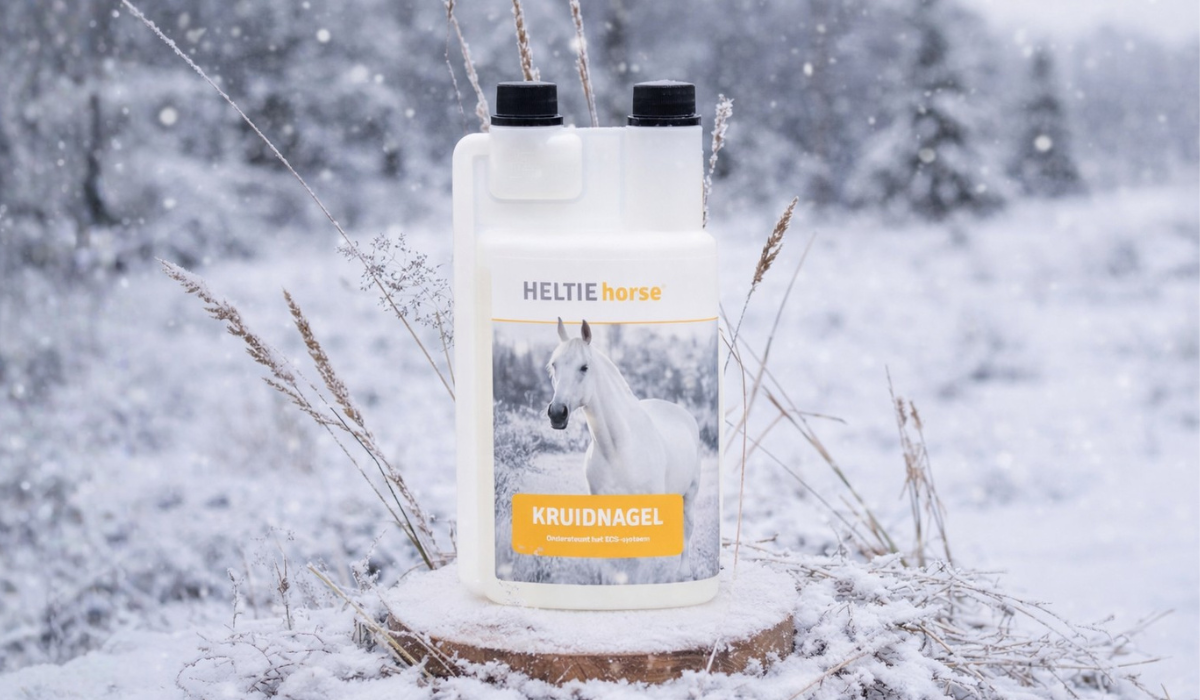
Winter has arrived! That became very clear over the past week. Now is the time to prevent a winter-related dip in your horse’s immune system.
Does every horse experience a winter dip in immunity?
No! Not every horse is affected in the same way. It often depends on the type of horse you have, how the horse is managed, and what you feed your horse.
That’s why having proper management in place is so important.
The basics are key!
Did you know that roughage helps a horse stay warm? Adequate grass, (unwrapped) hay, supplemented with herbs and branches, can help provide your horse with warmth.
In addition, it’s important to supply your horse with sufficient vitamins and minerals to maintain and support the immune system.
Depending on what your horse is currently receiving in terms of pellets, muesli, mash, etc., you can adjust this or supplement it with a so-called balancer. Examples include Vitalbix Daily Complete or Balance+ Muesli.
Is your horse a bit older? Never change its feed abruptly. Always do this gradually and allow the horse’s body to adjust to the new feed by mixing it with the old feed first.
Not enough support yet?
Is your horse still showing signs of a winter dip? There are several supplements, herbs and fruits that can help support your horse during this period.
Rosehip
One of the main causes of a winter dip in horses is a vitamin C deficiency. Vitamin C occurs naturally in high amounts in rosehips. These can be picked fresh and fed as such, offered dried, or given in liquid form, such as HELTIE Horse Liquid Rosehip.
Rosehip is rich in vitamin C and antioxidants and supports both the immune system and joint function. Fresh and dried rosehips can easily be mixed into the feed or given as a healthy snack. Liquid rosehip can be added to both feed and drinking water, making it a fun and valuable addition to a mineral buffet.
Nettle
Everyone knows nettle! It stings and can cause irritating bumps, but it is an exceptionally powerful plant. Nettle has a broad range of benefits: it has a blood-purifying effect, supports horses with allergies, and contributes to healthy digestion and flexible joints. In addition, nettle contains many vitamins and minerals, making it very suitable for immune support.
If you want to feed nettle as fresh as possible, let the plants wilt for at least one hour so they no longer sting. Nettle can also be fed dried or given as a liquid supplement, such as HELTIE Horse Nettle. The liquid form is especially useful when quick support is needed or when you want to add it to drinking water. Do not feed liquid nettle for longer than two consecutive weeks.
Echinacea
This plant is well known to many people as a true immune booster. Echinacea increases resistance, strengthens the immune system, stimulates lymphatic circulation and has antibacterial properties. It is important to note that feeding fresh echinacea (coneflower) is not recommended. Excessive amounts may cause liver damage, as it belongs to the same plant family as ragwort. It is best to use a liquid supplement and strictly follow the recommended dosage. In addition, it is advisable to include a break week every four weeks. For safe support, you can choose Phytonics Immu Boost and use it according to the manufacturer’s instructions.
Clove
Clove is a herb with a wide range of applications for horses. It has anti-inflammatory properties and supports the horse’s self-healing ability through the endocannabinoid system. This helps the body recognise issues more quickly and respond appropriately, promoting natural recovery.
For support, you can choose a supplement such as HELTIE Horse Clove. The cannabinoids in clove differ from those found in cannabis oil and therefore do not have a sedative effect. Please note that clove should be discontinued at least 72 hours before a competition.
Vitamin E
During winter, less vitamin E is available due to the reduced intake of fresh grass for most horses. In addition, hay generally contains insufficient vitamin E. If your horse has limited access to fresh grass or is a sport horse, supplementing vitamin E is recommended to help reduce acid build-up in the body.
Suitable options include HorseFlex Natural Vitamin E or HELTIE Horse Vitamin E, both of which help supplement the vitamin E levels in your horse’s diet.
In Summary
Make sure your horse can keep itself warm by providing enough roughage and feel free to be creative with this. If you’re unsure whether certain branches, plants or flowers are safe for your horse, always check this online first.
Supplement the diet with a vitamin and mineral pellet to ensure your horse receives adequate levels.
Alternate with healthy snacks and supplements. Feed rosehip for vitamin C, nettle to support digestion and its blood-purifying properties, echinacea as an immune booster (only in supplement form), clove to support the horse’s self-healing ability, and vitamin E to support muscle function and help prevent acidity in the body.
Still have questions?
Feel free to contact us — we’re happy to help!


