
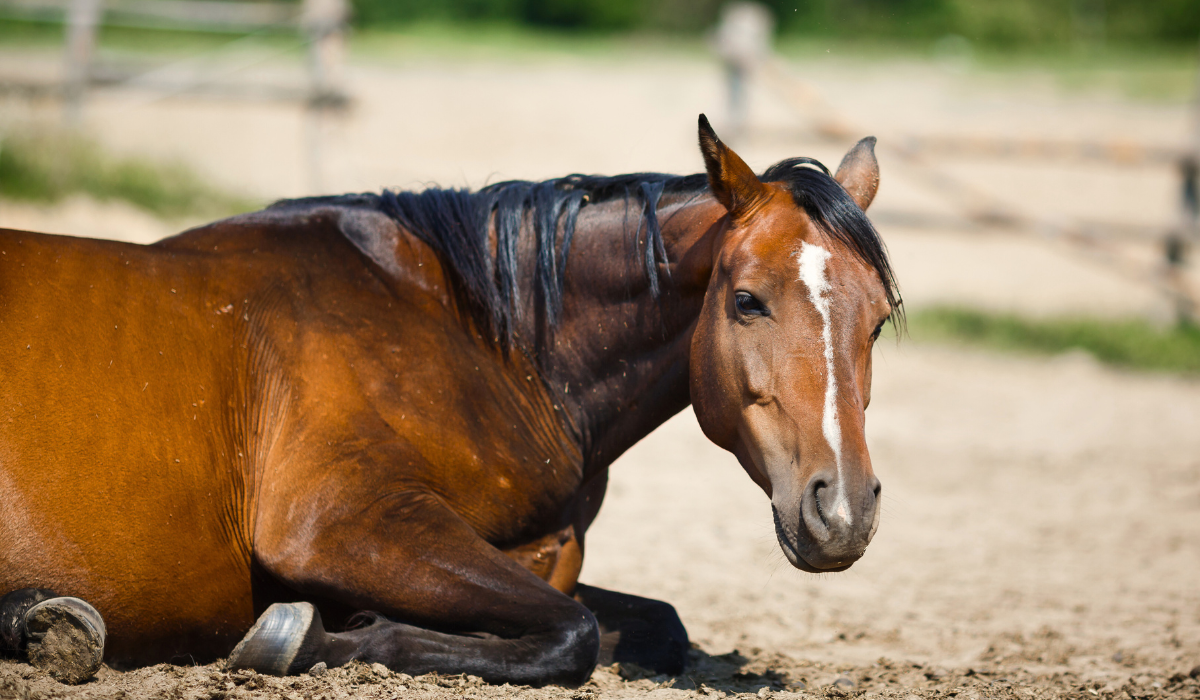
Gastric ulcers do not only occur in (top) sport horses. Recreational horses and foals can also suffer from gastric ulcers. With proper management, you can do a lot to prevent and, if necessary, treat gastric ulcers.
What is a gastric ulcer and how does it occur?
Gastric ulcers are painful small wounds on the stomach wall. You cannot see them without a gastroscopy, but you can often tell by your horse's behaviour. Research shows that you cannot necessarily link the severity of the gastric ulcer to the severity of the symptoms your horse shows, this depends from horse to horse.
The lower part of the stomach constantly produces gastric acid. For horses in the wild, this is necessary because they eat all day long. But for horses that are stabled a lot and only get 2 or 3 meals a day, this has some consequences. The production of gastric acid at times when the stomach is empty can cause problems. Without enough fibre in the stomach or during intense work with an empty stomach, the stomach acid can start to irritate the sensitive stomach wall, causing gastric ulcers. At first, gastric ulcers often cause vague symptoms such as decreased appetite, sensitivity when tacking or brushing around the stomach, more frequent yawning or gritting teeth and colicky behaviour. Untreated, this can eventually lead to reduced performance, weight loss and other digestive problems.
How do you recognise a gastric ulcer?
Although a gastric ulcer cannot be seen from the outside without a gastroscopy, a horse often gives signs. Some horses will indicate it more clearly than others, and not every horse will show all the signs.
Horses cannot talk, but by watching them closely on a daily basis and interacting with them a lot, you will get to know your horse's normal behaviour and habits. That way, you can quickly notice if something is wrong and intervene before the problem becomes more serious. Does the behaviour at any point deviate from this? Then your horse wants to make something clear to you. The following symptoms may be an indication that your horse is suffering from gastric ulcers:
- Pain when touching the abdomen or when lacing up
- Reduced appetite
- Stretching out the belly
- Difficult behaviour when riding
- Reduced performance
- Dull coat
- Grinding teeth or yawning
- Weight loss
- Colicky behaviour
If these symptoms persist, contact your vet to make a diagnosis and possibly set up a treatment plan.
A correct diagnosis is very important here! Only a gastroscopy can diagnose a gastric ulcer. Blood, faeces or saliva tests are not accurate. A gastroscopy is also important to see where in the stomach the lesions are located. The location of the gastric ulcer ultimately determines the best treatment to apply.
Gastric ulcers caused by mental stress
Horses are creatures of habit; for their mental well-being, they prefer to have a consistent routine every day as much as possible. Change (for example: change of herd mates, housing, owner, frequent transport to strange locations, etc.) can therefore cause mental stress. Because the horse evolved as an prey animal, it has an extremely sensitive nervous system. There is also a close connection between the brain and the digestive system. Thus, acute stress in a horse can cause thin manure very quickly.
What to do about a gastric ulcer and how to prevent it
In case of gastric ulcers, a visit to the vet is necessary. They then often recommend the use of omeprazole. This stops the production of gastric acid, giving the stomach time to heal. In the short term, this medicine has certainly proved its worth. Also, this is the only FDA-approved drug with scientific efficacy in healing gastric ulcers.
But prevention is better than cure! A well thought-out nutritious management is most important in this and much better than using omeprazole for a long time. Stomach acid is necessary for proper digestion. Stopping production completely, therefore, does not benefit digestion. Moreover, much higher stomach acid production is observed than before when omeprazole is suddenly stopped. Therefore, always ensure sufficient roughage in the ration and do not overdo it with sugar and starch. The more the horses have to chew, the more saliva will be produced. In gastric ulcer prevention, the use of buffers, which only neutralise excess gastric acid production, can also be effective.
The importance of roughage
Roughage (fibre) is the largest component of a horse's daily ration. Research has shown that the type of roughage you give also matters. The most important factor is that the forage is textured. This creates a thick, strong fibre mat in the stomach, forming a natural barrier against splashing stomach acid. The more textured the forage is, the more the horse has to chew, which then ensures more saliva production.
Dietary advice to optimally protect the stomach
It is very important to keep your horse's stomach environment as healthy as possible to prevent problems. For example, certain supplements or certain feeds can have a buffering effect.
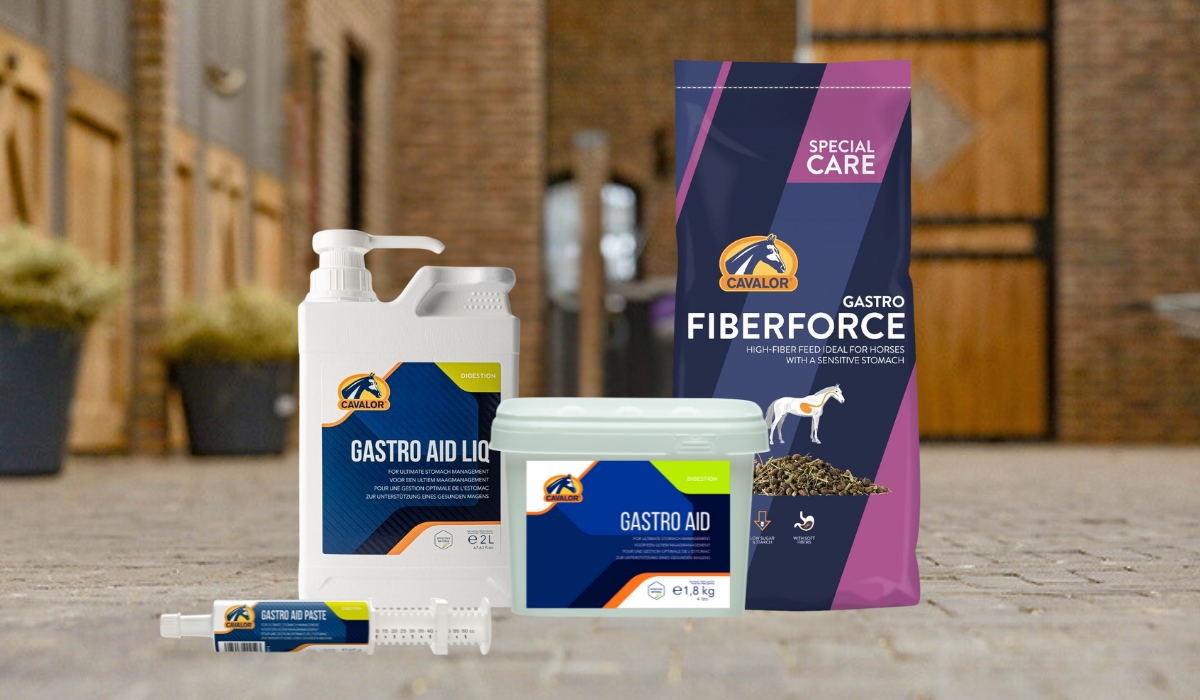
Especially for the stomach, Cavalor has developed Gastro Aid, which is available in paste, powder and in liquid form.
Cavalor Gastro Aid creates a healthy environment in the stomach with a focus on neutralising stomach acid and protecting the stomach wall. In the horse's stomach, stomach acid is produced 24/7. The horse's stomach is highly susceptible to developing wounds or ulcers. The paste is developed for horses that suffer from gastric ulcers and also reduced appetite. When your horse's stomach is less sensitive and your horse eats better again, you may switch from the paste to the powder or liquid version.
The liquid version and the powder are also used on a daily basis as a preventive measure for horses prone to gastric ulcers. Unlike the drug omeprazole, it does not shut down stomach acid production. However, it protects the stomach from damage by stomach acid.
The herbs in Cavalor Gastro Aid provide necessary protection of the stomach wall against excess gastric acid. To further support the stomach, they stimulate the production of saliva and help the stomach wall recover from any ulcers.
Although concentrates are often seen as a 'danger' when talking about gastric ulcers, Cavalor FiberForce Gastro is actually very suitable in the prevention and treatment of gastric ulcers.
Cavalor FiberForce Gastro is a fibre-rich mix for balanced stomach function. It contains a high proportion of fibre consisting of a mix of alfalfa and teff pellets, beet pulp and 8% timothy stalks, ideal for stimulating saliva production and neutralising stomach acid. The herbal mix protects the stomach wall from irritation and has an adjustment effect to maintain neutral stomach pH.
Cavalor FiberForce Gastro is low in starch and sugar, keeping glucose and insulin levels in the blood balanced. Ideal for horses with stomach problems. Also contains fenugreek which is extra palatable to stimulate appetite. The extruded grains ensure good digestion and are free of whole grains.