Pasture management of the horse pasture has recently become rather one-sided in many places. There is little diversity or unwanted plants in the pasture. Also, many pastures are overgrazed and lack a proper manure and worm policy. Often the land is fertilised once or twice a year by a farmer or contractor with slurry or fertiliser. Unfortunately, this has a major impact on the health of your soil and the food that grows on it. Naturally, you would prefer a horse pasture that provides a healthy source of nutrition for your horses. In this blog, we will therefore tell you more about better pasture management, fertilisation and seeding of your meadow. Applying this will make your meadow very diverse, prevent it from becoming compacted, cope better with dry periods, have less trouble with unwanted plants and make it a lot healthier for your horse to graze on!
Choose strip grazing or rotational grazing
By giving horses a new strip of grass every day or every few days, or moving the horses to a different pasture every few weeks, you prevent overgrazing and compaction of the pasture. This is because you always give the horses a patch of fresh grass, and therefore do not overgraze the other grass. In addition, you want the grass to have a minimum length of 8 centimetres from the ground. Basically, you shouldn't be able to see the earth when you look down on your meadow from above.
Manure the horse pasture
Remove horse manure from the pasture daily to prevent worm infections and high tufts of grass in the pasture. The grass where the horses have manured, will not be eaten again.
Determine soil acidity
A healthy soil of your horse pasture is of great importance. The acidity of the soil has a major impact on soil life and the horse pasture. An acid soil makes grass less able to absorb nutrients. As a result, the grass in the horse pasture does not grow as well and becomes more susceptible to diseases, pests and weeds. Therefore, test the acidity of the horse pasture soil once or twice a year. The optimum pH value of a horse pasture soil is between 5.5 and 6.5. You can measure this easily with the VITALstyle pH Soil Test.
The acidity of the soil is measured as pH value. The pH scale runs from 0 to 14. In the soil, the acidity varies from around 4 to 8. The lower the pH value, the more acidic the soil.
Is your soil too acidic? Then use VITALstyle Pasture Lime to optimise the soil's acidity.
What to do with acid soil?
VITALstyle has developed Pasture Lime especially for horse pastures with excessively acid soil. It has a unique composition that optimises the acidity of the soil. With Pasture Lime you ensure the correct pH value of the soil in the horse pasture, improving the growth of meadow grass and preventing the growth of unwanted weeds such as moss, horsetail and sorrel. Pasture Lime is absorbed by the soil only at the moment when the soil is actually too acidic. The pellets can remain visible and effective for a long time. It does no harm to already let the horse out in the meadow when the Pasture Lime is not yet fully dissolved.
After liming your horse meadow with Pasture Lime, you can start fertilising your meadow with Pasture Manure. 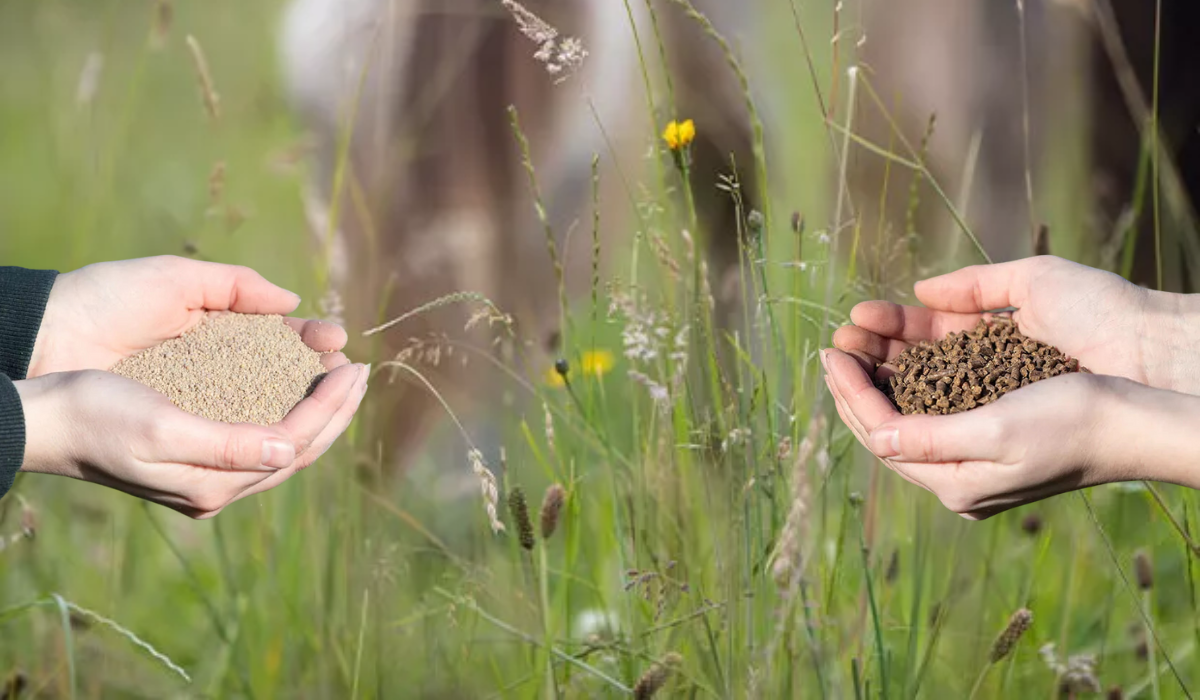
Fertilise the horse pasture with a suitable fertiliser
Regular fertilisation of horse meadows prevents stressed grass and the excessive production of fructan. Especially for horse meadows, VITALstyle has released Vegatable Pasture Manure, a vegetable fertiliser for a strong horse meadow. After fertilising your horse pasture with VITALstyle Pasture Manure, the horses can go straight back out onto the pasture. This is because Pasture Manure is free of animal ingredients. Pasture Manure is enriched with organic dried seaweed and a unique mix of bacteria, fungi and protozoa for healthy soil life and a strong meadow. This gives undesired plants less chance. Pasture Manure is also free of chemical fertilisers, which prevents burning of the grass.
When should you fertilise your horse pasture?
Fertilise your horse pasture twice a year; the fertiliser will feed for up to 120 days. In case of intensive grazing or poor (sandy) soil, fertilising three times a year is recommended. Pasture Manure can be used from a soil temperature of 5°C. You can calculate the soil temperature by adding the night temperature and the day temperature and then dividing by two. Use Pasture Manure in spring (1st fertilisation between March and May) and in summer (2nd fertilisation between June and September) for a beautiful and strong horse pasture.
Remove unwanted plants
You definitely do not want plants such as Ragwort and Bitter Dock in your horse paddock. This is because these are poisonous plants for horses. Remove these plants and immediately sow the hole with a grass mixture for horses, such as VITALstyle Grass Seed. If there are other plants in your meadow that you are not sure if horses are allowed to eat, find out first and if necessary, remove these plants as well before putting the horses in the meadow.
Sow the meadow in time
After you have fertilised the horse meadow with Pasture Manure, you can start sowing the meadow with VITALstyle Grass Seed. This is a mixture of various types of grass seeds for a horse pasture rich in variety and structure. The balanced mix of grass seeds is extremely suitable for horses due to its low fructose content. Many horse pastures consist of English Ryegrass, which has a high fructan content. With Grass Seed you ensure a biodiverse and healthy horse pasture. It is suitable for all soil types and is resistant to dry and wet weather conditions.
Grass Seed can be sown from March to November at an ambient temperature of 15°C - 25°C and a soil temperature of 10°C or more. You can calculate the soil temperature by adding the night temperature and the day temperature and then dividing by two. The most optimal period for sowing is in the months of March, April May, August and September.
Herbs and flowers in the horse pasture
Besides a variety of grasses, you can also sow herbs or flowers in the horse pasture. However, herbs and flowers are more sensitive to soil conditions and temperature than grass and may not flourish as well if you do not get this right. VITALstyle Meadow Herbs and Meadow Flowers can be sown in the horse pasture, but you can also lay out a separate herb or flower strip to do justice to the herbs and flowers. Don't have the possibility to make space for this? Then sow it in a flower- or plant box!
VITALstyle Meadow Herbs and Meadow Flowers are mixtures of various types of seeds for a varied horse meadow. The herbs and flowers are edible whole for horses and ponies and provide extra variety in the ration or as a treat. Feed in moderation.