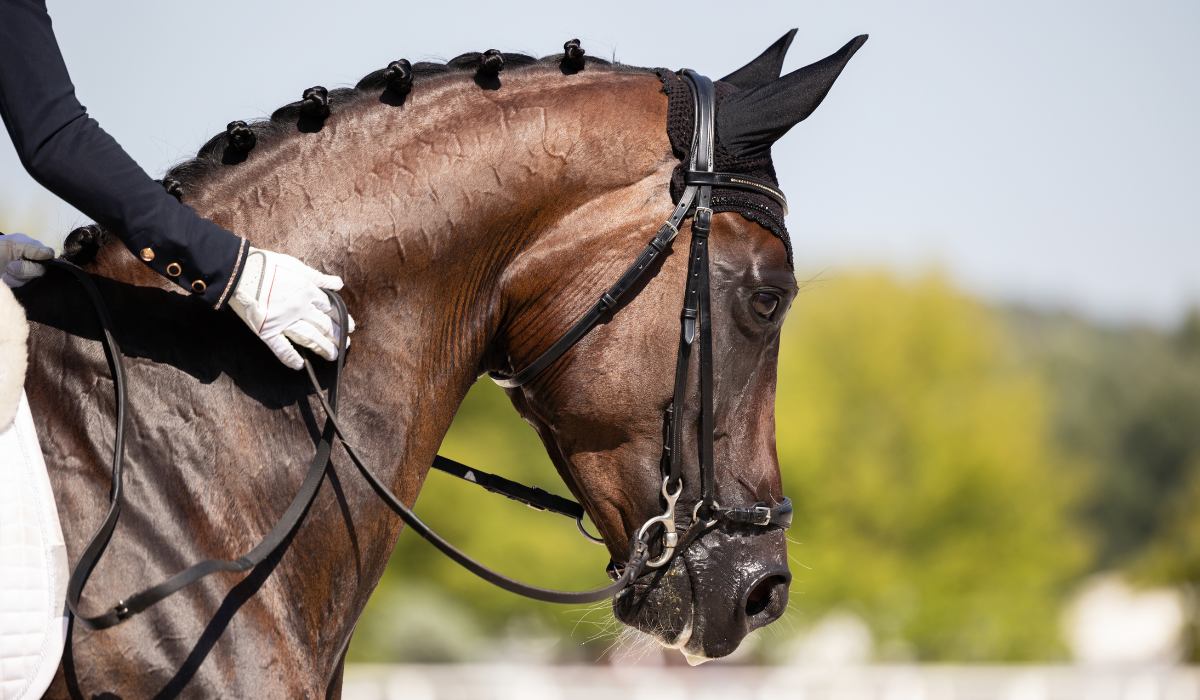
The warmer days are (finally) coming again. Most people can appreciate slightly higher temperatures, but the thermo neutral zone of horses is quite different from that of humans. For an untrimmed horse, this zone is between -5 and +15 degrees. That is why it is extra important to give your horse extra support during the (extreme) hot days. You can read all about how to do that in this blog.
Adjust the training schedule and ensure a good cooling down
If you still want to train your horse during the hot days, it is important to adjust your training schedule accordingly. For example, it is best to ride early in the morning or late in the evening to be before or after the heat.
In addition, a good cooling down is very important. Walk enough and give your horse a cooling shower afterwards. Cooling down your horse properly when he has been sweating will prevent stiff muscles and permanent damage in the body. If the horse continues to sweat after cooling down, it means he is still too hot. By subsequently washing your horse with cold or lukewarm water and a refreshing cooling shampoo, you increase the cooling effect. Do this, for example, with NAF Cooling Wash, Cavalor CoolSens or Sectolin Cool Fresh shampoo. These shampoos will help your horse relax extra, cool and refresh the muscles.
Refilling electrolytes and maintaining fluid reserves
On average, a horse loses 30 litres of fluid per day and this can reach up to 60 litres of fluid loss. During intensive training, a horse loses as much as 15 litres of fluid per hour. This is because a horse sweats to get rid of its heat; the sweat condenses on the skin, extracting heat. However, sweating also brings disadvantages, because in addition to a lot of fluid, a large amount of electrolytes is lost. The fluid and electrolytes a horse loses must be refilled after sweating. This is to prevent dehydration and to ensure that all biochemical processes in the horse's body can continue to run properly.
The fluid a horse loses must be replenished with sufficient water. Did you know that a 500 kg horse drinks around 25 to 30 litres of water a day on average. At warm temperatures, when the horse is in training, this need for water is higher: a horse can then drink as much as 50-100 litres a day. If a horse has lost a lot of fluids and electrolytes, it may not want to drink anymore, as its thirst mechanism may be disturbed. What can help with this is to put a little salt on your horse's tongue to make sure he starts drinking again.
The ideal time to give electrolytes is shortly after exercise, this gives the most optimal effect. That way, the minerals are not lost and your horse's reserves are quickly refilled. A fine way to give your horse enough fluids and electrolytes on hot days is by making a mash. You can mix the electrolytes through Cavalor Mash & Mix, Vitalbix Nutrimash or VITALstyle SluesliMix Mash. If you want to further stimulate chewing, you can also mix in a bit of roughage mix, such as Vitalbix Fiber-mix, VITALstyle Soft & Fiber Roughage mix or Vitalbix Pure Lucerne+.
Different varieties of electrolytes
There are many brands that sell electrolytes as supplements. Thus, they also come in different variants; in liquid, powder and paste form.
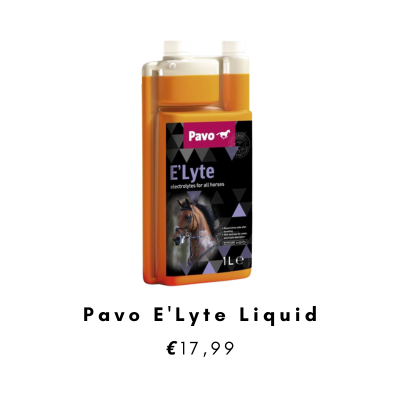
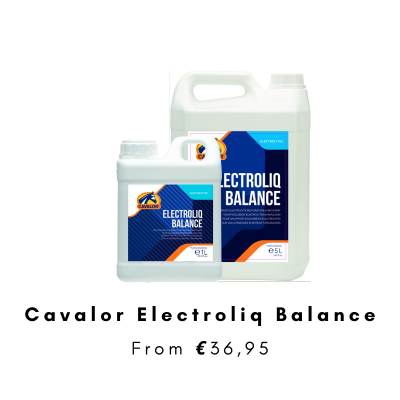
Liquid electrolytes
With liquid electrolytes, you can choose to give it over the pellet or mix it with a mash, for example. In addition, this variant is absorbed faster than the powder form. 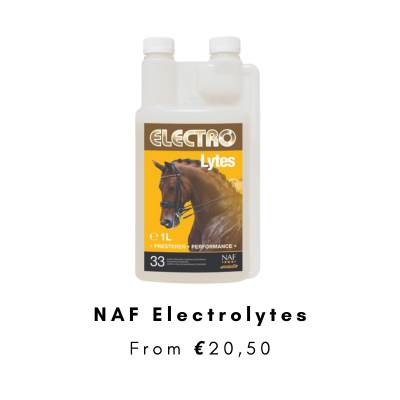
Powdered electrolytes
Like electrolytes in a liquid form, this is given over the feed. However, it is advisable to give it through a mash or add linseed oil if necessary to prevent dusting.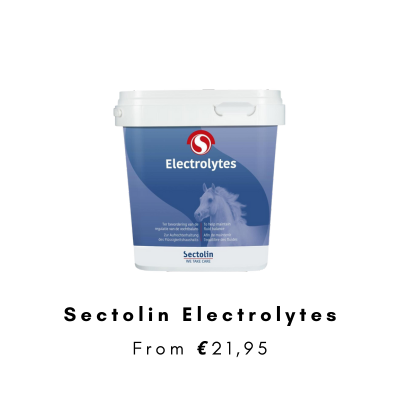


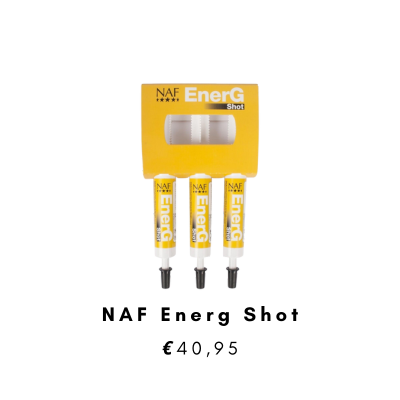
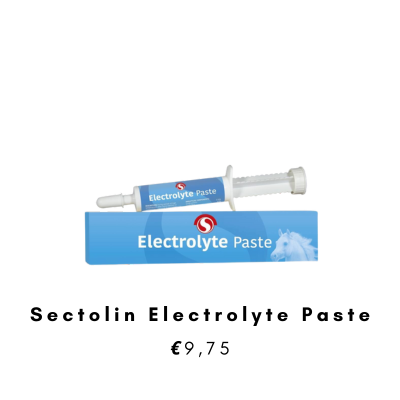
Pasta form
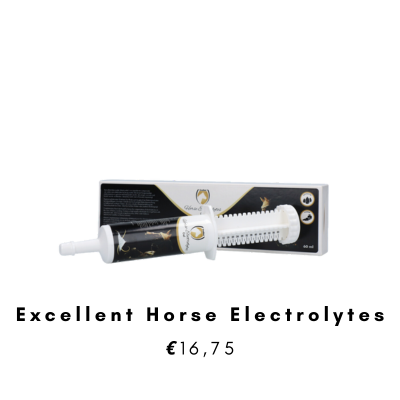
When your horse could use an energy boost, prior to heavy exercise where a horse will lose a lot of electrolytes, an energy boost with electrolytes can come in handy. This allows a horse to keep up the work longer and will give it more energy. This is mainly used for horses that run high in the sport and have regular heavy training and competitions. You spray this paste directly into the mouth and do not give it over the feed.
Pellet form
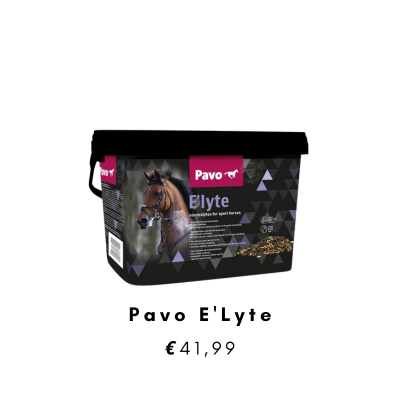
If your horse does not easily eat supplements in powder or liquid form, (pressed) pellets are of course ideal. Plus, you can give this form at any time, very handy for immediate use to maintain fluid balance during transport or stress.