

Sugar and starch are probably the most discussed elements when it comes to healthy feed for horses. It is important to keep the sugar and starch levels in your horse's diet as low as possible, but why exactly? In this blog, we explain what sugar and starch do in your horse's body and why it is wise to limit the amount of these in the diet.
SUGAR IN YOUR HORSE'S DIET: WHAT YOU NEED TO KNOW
Sugar is not necessarily bad for your horse, but it’s all about the amount and type of sugar in its diet. Sugar serves as an important energy source and is needed for the absorption of other nutrients in the body. However, just like in humans, too much sugar can be harmful to your horse’s health.
An excessive amount of sugar can lead to an increased blood sugar level. If this persists over time, it can even cause health issues, such as insulin resistance. That’s why it’s essential to be aware of the sugar content in your horse's overall diet. This includes not only roughage but also concentrates and any supplements. By keeping an eye on the sugar level, you ensure that your horse stays healthy and uses its energy properly. VITALstyle SugarBalance is specifically designed for horses sensitive to sugar, for example, those with access to pasture. SugarBalance helps maintain a healthy blood sugar level.
NATURAL SUGARS IN YOUR HORSE'S FEED
Natural sugars are found in various plant sources such as vegetables, fruits, grasses, flowers, and herbs. These sugars serve as the plant's natural growth energy. For example, grasses contain fructan, while vegetables and fruits mainly contain fruit sugars. The sugars derived from these natural sources are often referred to as "natural sugars" because they are not artificially added to the feed but are naturally present in the ingredients.
You will always encounter sugars in horse feed, horse treats, and many horse supplements. This is especially true for products containing plant-based ingredients, with the exception of items like Linseed Oil and MagnesiumCiitraat, which do not contain sugars. It is important to understand that these natural sugars are not necessarily harmful, but the total amount of sugar in your horse's diet must be carefully managed.
ADDED SUGARS IN HORSE FEED
In addition to the sugars naturally present in plant-based ingredients, sugars can also be added to horse feed. This is often in the form of carbohydrates and starch from grains, or molasses derived from sugar beets. These added sugars are primarily found in (concentrate) feeds such as pellets, muesli, or mash, but also in some supplements.
At Vitalstyle, we consciously choose not to add any sugars. These sugars are not necessary and can place a burden on your horse's digestion and metabolism. Consistently feeding too much sugar and starch can lead to spikes in blood sugar levels, which the body must regulate with the help of insulin. This can result in fluctuations in your horse's energy supply, which is not ideal for its health and performance.
To avoid such spikes and dips in blood sugar levels, it's better to opt for fibers and fatty acids. These provide slowly released energy, which is much more stable and healthier for your horse in the long term.
CHECK THE LABEL FOR ADDED SUGARS!
Dextrose, glucose, fructose, maltose, cane sugar, and molasses are examples of added "fast" sugars that you may encounter on horse feed packaging. These sugars cause rapid fluctuations in blood sugar levels, which is not ideal for your horse's health, especially if it is sensitive to sugar. It is therefore advisable to avoid these sugars as much as possible, especially if your horse is prone to fluctuations in blood sugar levels or insulin resistance. Pay close attention to the label and choose feed with a lower content of added sugars.
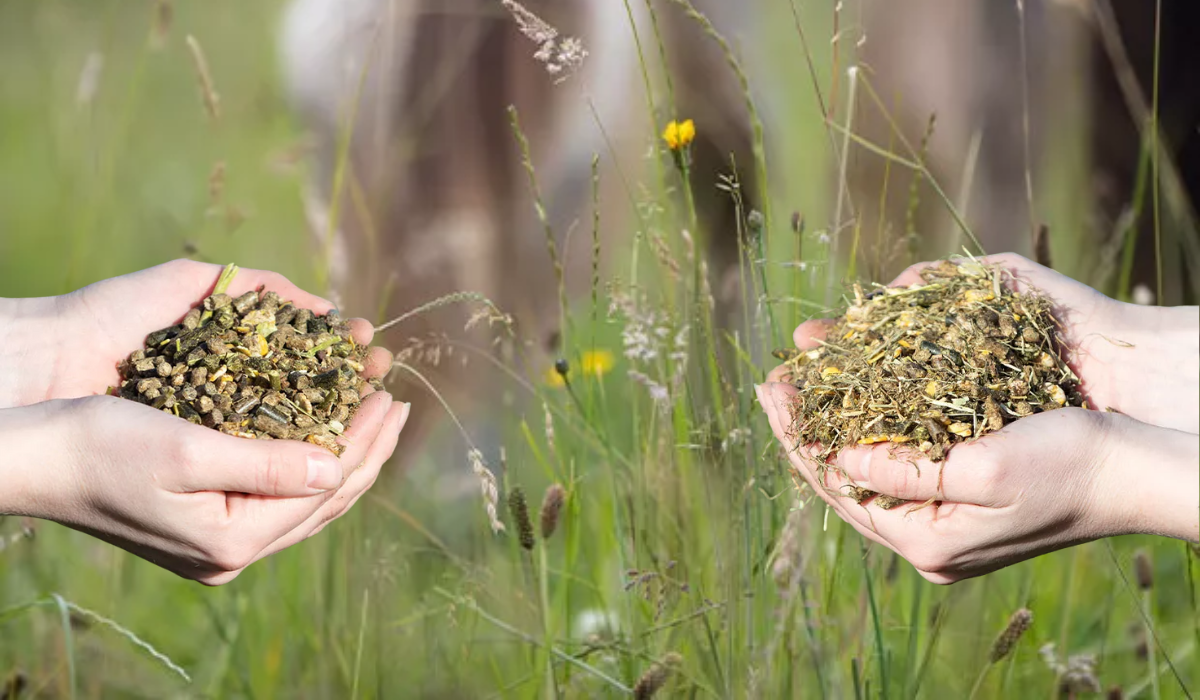
HOW HORSES DIGEST SUGAR AND STARCH
Ideally, sugar and starch are digested in a horse's small intestine. Fibers that are harder to digest are broken down by bacteria in the large intestine, providing energy for the horse. However, when there is an excess of sugar, such as when the diet contains a lot of sugar, not everything can be digested in the small intestine. The remaining sugar reaches the large intestine, where various bacteria are present. Some bacteria respond to the sugars by multiplying, which can disrupt the gut flora.
This disruption can cause various issues, such as acidosis, diarrhea, or loose manure. In the worst case, this can even lead to laminitis. Many horse owners are now aware of the risks associated with fluctuating sugar levels (fructan levels) in grass and take this into account when grazing their horses. However, a high fructan level in grass ultimately leads to a high sugar content in roughage, which is much harder to manage. It remains important to carefully monitor the sugar content in roughage as well to prevent health problems.
GRAINS IN HORSE FEED
Traditional concentrates often contain grains such as wheat, barley, oats, and corn. These grains are a source of energy and provide useful nutrients like proteins, vitamins, and minerals. However, they can also have drawbacks. Grains contain starch, and in large quantities, this can lead to health issues. The high starch content in grains causes fluctuations in blood sugar levels, making grains less suitable for horses that are sensitive to sugar.
Additionally, grains provide fast and readily available energy, which can lead to excessive stimulation and nervousness. Many traditional grain-based horse feeds can make a horse become "hot," resulting in increased energy and restless behaviour. Therefore, it’s important to carefully choose the feed you give your horse, especially if it is sensitive to fluctuations in blood sugar levels.
GRAIN-FREE HORSE FEED WITH A LOW SUGAR AND STARCH CONTENT
Grain-free feed, such as the Vitalstyle mueslis, provides an excellent alternative to traditional grain-based horse feeds. Instead of grains, this muesli derives its energy from fibers and fats (such as oils). As a result, the sugar and starch content is kept to a minimum, ensuring a healthier balance between fast and slow energy. This not only helps prevent fluctuations in blood sugar levels but also supports your horse's overall health and well-being.


