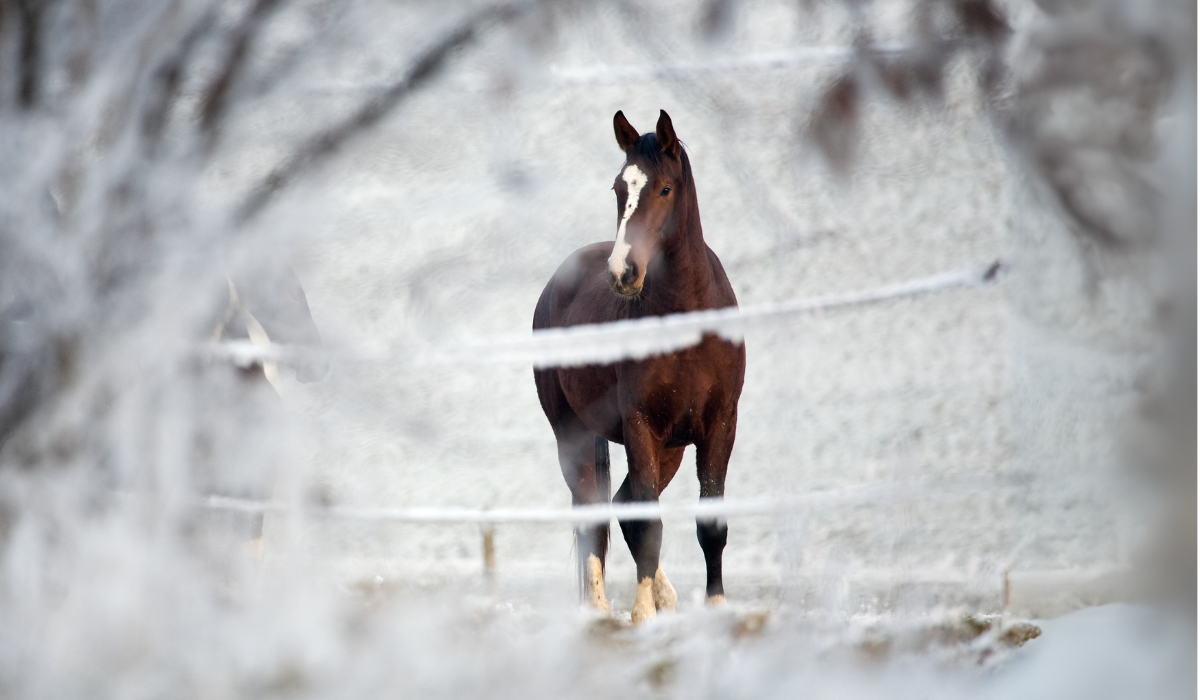
We always hope for a beautiful white winter, but in reality it is often wet and cold. A lot changes for horses in winter. For instance, they go from pasture to paddock and possibly more in the stable, and they will go from grass to hay. Because they often have less space in the paddock than in the pasture, they will also get less exercise. Their coat will also start to change as the days get shorter and colder. In this blog, you will read all about how to prevent or solve the most common winter ailments.
More chance of thrush
In winter, horses are more likely to be in muddy environments where moisture and urine can cause hoof problems. The moist environment allows bacteria to grow well in the hoof and, in addition, they need very little oxygen to survive. The symptoms of thrush are easily recognised by the bad-smelling hoof. Your horse may also start walking sensitively because of the swellings.
If you want to treat thrush (preventively), use Cavalor Dry Feet. The thrush will disappear very quickly by attacking the bad bacteria with good bacteria. Dry Feet is 100% natural and contains a combination of good bacteria (probiotics) and inulin (prebiotics). The inulin stimulates the probiotics present in the product in their activity and also the good micro-organisms already present on the hoof. Together, they colonise the entire hoof surface, actively repressing bad bacteria that cause thrush, for example.
Mug, how to get rid of it?
It's not just the hooves that can suffer from a wet winter. Mug is also a common problem. It is an irritation of the horse's skin. The skin dries out, causing fissures that can be very painful. It can also cause swelling which eventually leads to lameness. Sometimes the mug is so persistent that it seems like you can't get rid of it. A boost to the resistance can therefore definitely help prevent and cure this (extreme) mug.
To tackle mug even more broadly, it is wise to, therefore, also strengthen your horse's resistance. Start with a 45-day course of Resist + Vit C. This is a powder that supports the immune system with antioxidant mix, herb mix and essential oils. A better resistance makes your horse less prone to infections and protects your horse from pathogens. In addition, we recommend feeding FiberForce for six weeks. This fibre-rich mix with long fibres ensures strong stomach and intestinal function. A well-functioning gut is the basis of high resistance. By adding OilMega to the ration, you provide a balanced mix of fatty acids. It ensures a healthy intestinal flora and gives extra support to the immune system. This gives an extra boost to the resistance.
When the mug is not too severe, wash it with Derma Wash, dry the leg and then rub it with MudDoc. Repeat until the mug is completely gone and the skin can start to recover. 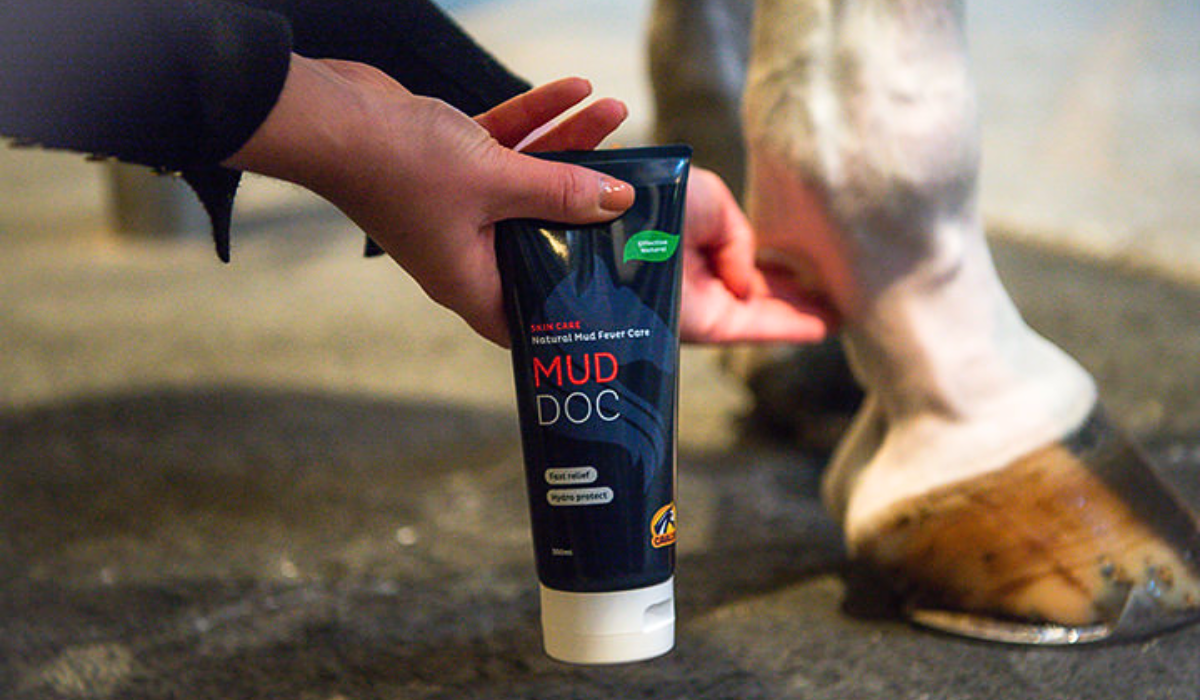
The thick winter coat gets in the way
A (sport) horse that is trained through the winter can suffer from its warm winter coat. To make things easier for both rider and horse, you can start clipping the coat. After clipping, wash the horse with Derma Wash for perfect skin recovery. Remember that your horse will be a lot colder without its hair. Extra rugs are definitely needed! The shaved coat also makes cooling down more efficient, your horse cools down faster. But do not put a rug on immediately after riding/while getting off the horse. Have you had an intensive training session? Then it is necessary to cool the legs properly, whether the horse is shaved or not.
Restore your horse's sensitive skin with Derma Spray to prevent skin irritation. By treating wounds or irritated areas with Derma Spray, you ensure the skin's own recovery. Like Dry Feet, Derma Spray uses pro- and prebiotics: micromechanisms that help the horse recover naturally.
Airway irritations: lots of coughing and wheezing
Not only the legs, coat and hooves get irritated faster in winter. The respiratory system also suffers more in winter. During the cold days, we all prefer to be inside rather than outside. You ride more in an indoor arena (if you have one) and the horses are also (sometimes) stabled more than in summer. This also affects the horses. Doors and windows are closed more than in the summer season. That causes less fresher air in the stable. Dust also gets more chance, which in turn can cause respiratory sensitivity.
Fortunately, you can prevent respiratory irritation:
- Open doors and windows when you muck out the stables.
- Dampen the floor before sweeping, it gives dust less of a chance.
- Keep roughage free of dust and mould. Steaming the feed can help.
- There are several herbs that have a positive effect on the air system. You will find these herbs in Bronchix Liq and Bronchix Pure.