
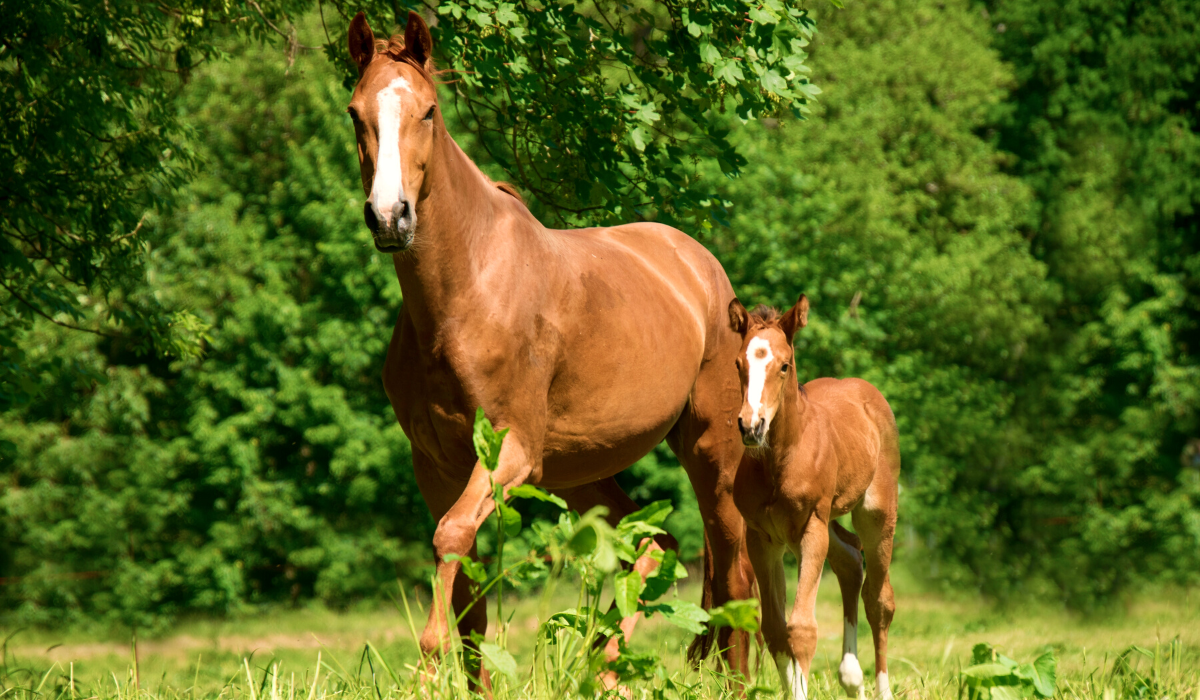
Spring is coming again, and the first foals are already being born. To be well prepared for the arrival of your foal, we have listed a few things for you.
The preparation
Firstly, it is important to decide for yourself whether you want to bring your foal into the world at your own stable or whether you will stable the mare somewhere else where they can supervise the whole birthing process. There are stables that specialise in foal births and the whole process surrounding them. If you have decided to temporarily stable your mare somewhere else, do this well in advance. This will give your mare time to get used to her new surroundings.
Make sure you have a good camera and/or Birth Alarm to keep an eye on your mare. Of course, you don't want to miss the birth or be too late, as the birth goes very quickly. You have different types of Birth Alarms: The Birth Alarm Lite 2.0, the Birth Alarm Premium and the Birth Alarm Premium Plus.
The big difference between the Lite 2.0 and Premium version is that with the premium there is a possibility to connect to 4 mobiles and the option to get status messages. The difference between the premium and premium plus is that with the plus, it comes with a pre-programmed prepaid SIM card and can read status messages and reports on your mobile phone with Telegram.
In addition, you can attach the Birth Alarm to a special anti-roll girth or attach it to a halter. With the anti-roll girth, the mare cannot roll over, so this cannot damage the Birth Alarm or cause it to fall out of its holder. The anti-roll girth comes in a complete version with girth or only with the top of the anti-roll girth, the girth that goes with it can also be bought separately.
What's useful to have prepared:
- Bandages to tie the mare's tail with
- Hot water and towels
- Lubricating cream and sterile gloves for when you need to help
- A thermometer
- Lodine and Vetericyn for disinfecting and drying out the navel (cord).
- Foal milk (Cavalor Hyppolac) and a bottle for when you may need to feed the foal yourself.
- Your vet's number within reach. Preferably also written down somewhere and of course saved in your phone. If your foal is lying wrong (you can't feel its nose or front legs), call the vet immediately.
The condition of the mare
Not only you but also your mare should be well prepared for the foal's arrival. Make sure she is in good condition; this will make the delivery a lot easier for her. As long as your mare feels well, she can continue to be lightly trained until six weeks before the expected delivery date. Besides sufficient exercise, she should also be given proper nutrition and perhaps supportive supplements. This is because it is important that she gets enough vitamins and minerals. During the first months of pregnancy, give your mare the same feed she used to get. From the 8th month, the foal grows very quickly, and the mare prepares for the lactation period. Because of this development, your mare needs a different type of concentrated feed, namely a mare's pellet. Cavalor Probreed (mix or pellet) is a protein-rich feed that is also rich in trace elements and vitamins (copper, zinc, manganese, calcium, phosphorus & magnesium) and contains all nutrients for pregnant and lactating mares. It supports the proper development and balanced growth of the foal and keeps the mare in good condition. Your mare now needs more protein and a higher percentage of minerals. Proteins help develop a dense bone structure and a solid skeleton. Mare pellets can be fed until the foal leaves the mare, as this is also good for healthy milk production. If your mare still does not get enough vitamins and minerals, Cavalor Nutri Grow is a good supplement for this. It ensures that it covers vitamin and mineral requirements without adding extra energy and protein. 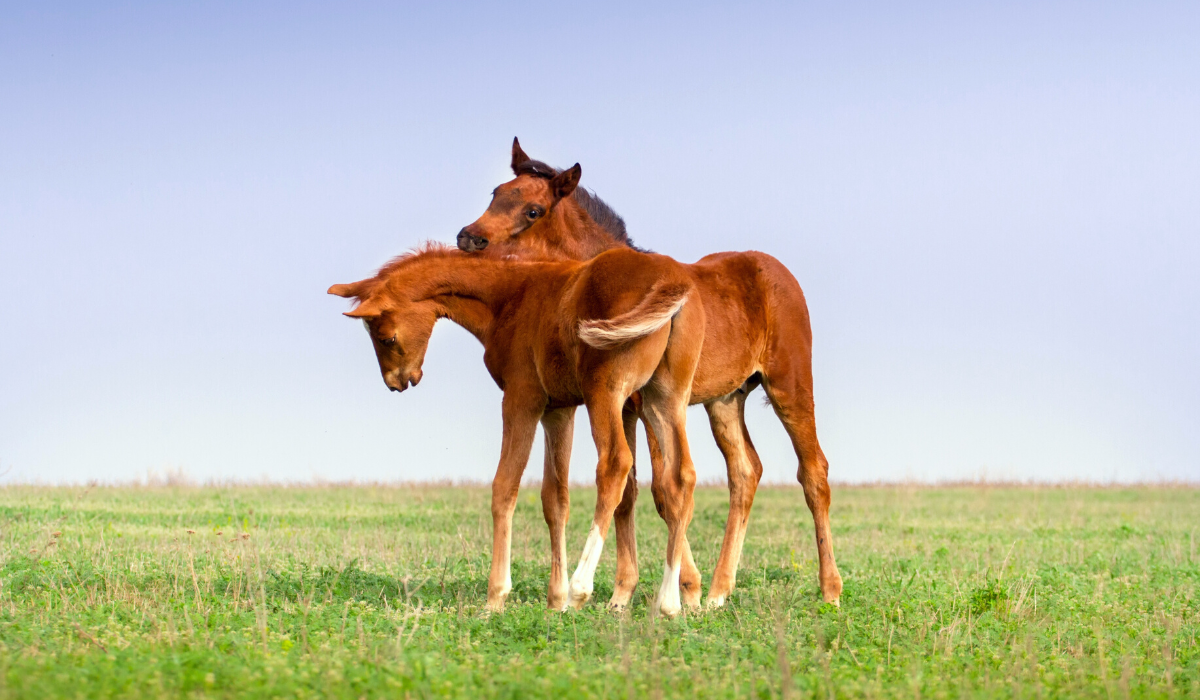
After birth
Already one hour after birth, the foal tries to stand up and looks for its mother's udder. Its motor skills are not well developed at the beginning, so it is still a bit wobbly at first. The mother's colostrum is very important, as it contains antibodies, so the foal builds up a good resistance. Four to six weeks before the foal is weaned, you can already start feeding it Vitalbix Breed & Grow. This is a unique, fibre-rich muesli specially formulated for pregnant mares, foals, young horses (up to three years old) and breeding stallions. Breed & Grow is rich in fibre, low in starch & sugar and contains a balanced level of easily absorbable vitamins, minerals and trace elements. It supports healthy growth of the foal and the development of strong bones, tendons and joints. When feeding the foal with its mother, it is convenient to use a foal feeder. These feeders are specially designed with feeding bars so that it is only accessible to the foal.
Introducing the foal to a halter
When the foal has just been born, they still want to stay close to their mother, but as they get older, they start exploring the world. Then they sometimes want to walk in a different direction. So, it is useful to start putting a halter on and getting them used to it early on. However, it is important to practise walking with a halter properly and not to pull, but to guide the foal with some pressure on its buttocks.
Playing outside
It is very important for a foal to be outside a lot and to be able to play in a paddock or in the meadow. Preferably also with other horses, sufficient exercise and social contact is very good for the foal's growth and development. Exercise brings more fibres to the cartilage at the joints. In addition, the foal's motor skills improve enormously through playing.
Foal blankets
If your foal is born early in the year, it often suffers from cold nights and rainy days. To protect your foal from this, special foal blankets have been developed. These blankets are made to grow with the foal.