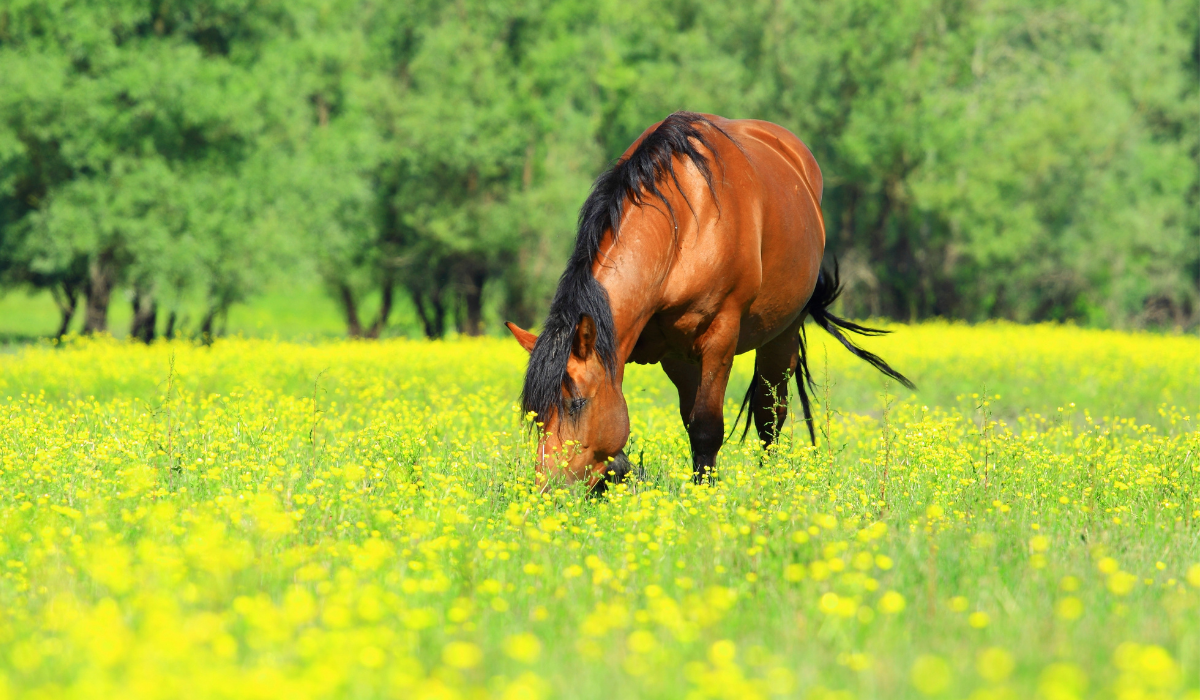
Now that the warmer days are upon us and its longer light outside, it's time again for the horses to enjoy themselves on the pasture. For horses that are not in the pasture year-round, it is very important that you prepare them properly.
Building up grazing
Prior to the grazing season, it is good to give your horse a detox cure. This is because spring is a time when horses go through many changes, such as from the paddock to the pasture. Spring is an intensive period for the liver and kidneys. The body produces a lot of waste products, which must be broken down by the liver. Products such as VITALstyle DetoxMix, Cavalor Hepato Liq and NAF D-tox can help your horse with this.
Give your horses some hay or haylage in the morning before they go out to pasture, so that they don't go out to pasture on an empty stomach. Do not put your horse in the field for a whole day, but build it up slowly. Start with half an hour or an hour and build it up to an extra hour every two or three days. It is also different for each horse how they react to the grass and adjust your build-up schedule accordingly.
What can also help is strip grazing. This involves giving the horses a little more grass every day by moving the (electricity) wire in small pieces. Our Horizont Cord Turbomax is a good option for this, in combination with the Horizont Earthpin and the Horizont Turbo Insulator String.
Are you at a boarding stable and want to get your horse used to the grass. Start a few weeks in advance with half an hour or an hour of grazing by the hand every day. Your horse's intestinal flora needs a few weeks to adjust.
Horses have a very sensitive gastrointestinal tract; it first has to get used to the delicious spring grass. So, when you make the transition from paddock or stable to pasture, it takes time for your horse's intestines to get used to it.
Fresh grass contains fructan (sugars) and when fructan is digested lactic acid is released. When the intestines can't handle this, it can lead to acidification of the intestines. This then results in intestinal problems and colic. So, make sure you calmly let your horse get used to the grass!
Do you suspect your horse has colic?
Call your vet. After your horse has had colic, you can give your horse's intestines extra support with, for example, VITALstyle's Bowel Balance. After colic the resistance of your horse is lower than normal. Bowel Balance protects the stomach and intestinal wall and supports the liver. It brings the gastrointestinal function (back) into balance and ensures an optimally functioning gastrointestinal tract.
Does your horse have a very sensitive gut flora and do you want to support him / her during the transition from stable / paddock to pasture. You can also give NAF In The Pink Powder or VITALstyle Bowel Balance as a basic support. Start feeding two days before your horse goes out to the pasture and continue until it runs out. Cavalor Digest and Vitaflora are also products that can help prevent or reduce the risk of problems such as colic.
Seasonal Stress
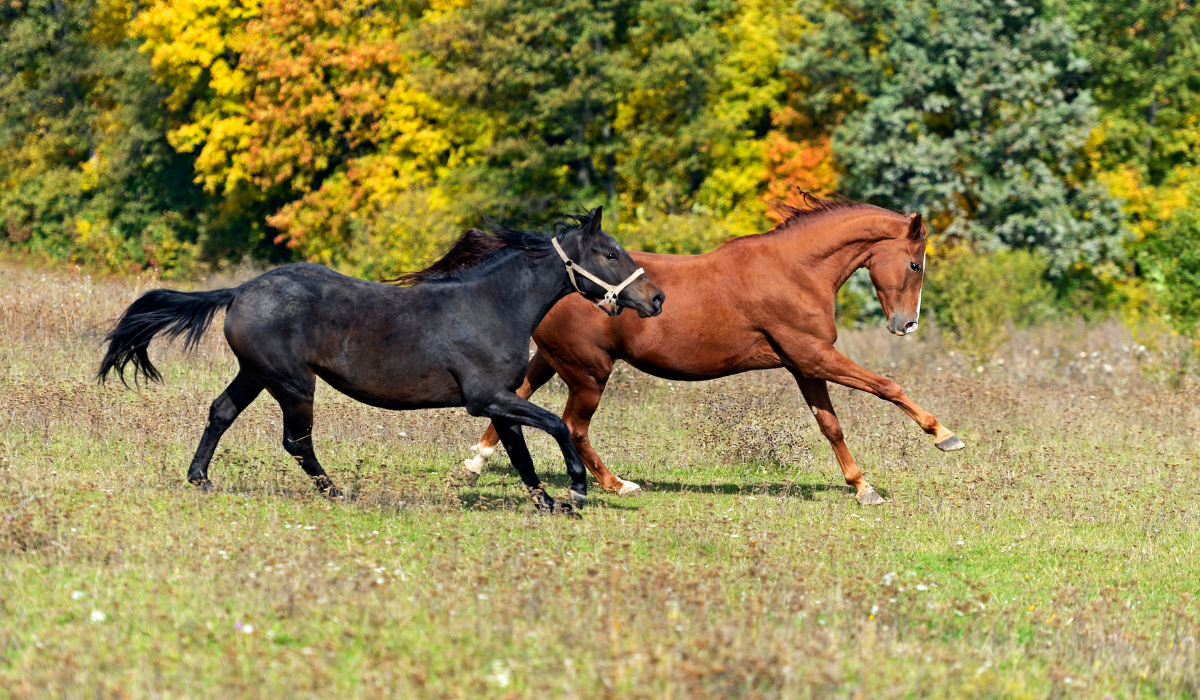
Many horses suffer from seasonal stress. This can be due to: bright sunlight, pollen, flies or a windy day. This can result in discomforts such as stress and head shaking. Improving the diet with targeted nutrition optimizes the horse's natural defences.
NAF Seasonaze contains a unique complex of scientifically verified, natural antioxidants to flush free radicals from the system. Calming herbs are included with bioavailable magnesium to support a calm, confident outlook. Seasonaze can be administered daily to the feed during periods of seasonal restlessness and can be increased as needed.
Horse gets ''fat on air'' how does this happen?
A horse is made to cover long distances every day. In the winter periods, wild horses could not find much energy-rich food, so they came out of the winter lean. The rising temperatures and spring sunshine provide a lot of sugars in the grass, which was then also meant to build up large reserves.
Our horses no longer come out of the winter lean, on the contrary. As a result, the spring causes horses to be overweight. All the sugars in the spring grass can lead to insulin resistance. Insulin resistance causes a disturbance of the glucose (sugar) and energy balance of the horse. Horses with insulin resistance are at increased risk of obesity, laminitis, tail and mane eczema, and PPID, formerly known as Cushing's disease.
Adapt your horse's diet and exercise pattern! Provide sufficient roughage of good quality, with little sugars. Avoid stress, this also has negative effects on the sugar metabolism. Check whether your horse suffers from a thickened mane and other abnormal fat deposits.
Phytonics Gluco Balance regulates the sugar metabolism. The best results are achieved by the combination of management adjustments in combination with the product. Horses often have to get used to a new taste, so start with a lower dosage and make the feed a little wet, to prevent blowing away.